Staying informed without phones or internet
Broadband and cordless phones stop when the power does, and you cannot count on mobile coverage lasting. This guide covers the ways you can still get information and ask for help.
In a long power cut, knowing what is happening and who to call is worth almost as much as having supplies. The trouble is that many of the ways we normally find out depend on mains electricity. A few cheap, low-tech items give you back some of that.
A radio that does not need the mains
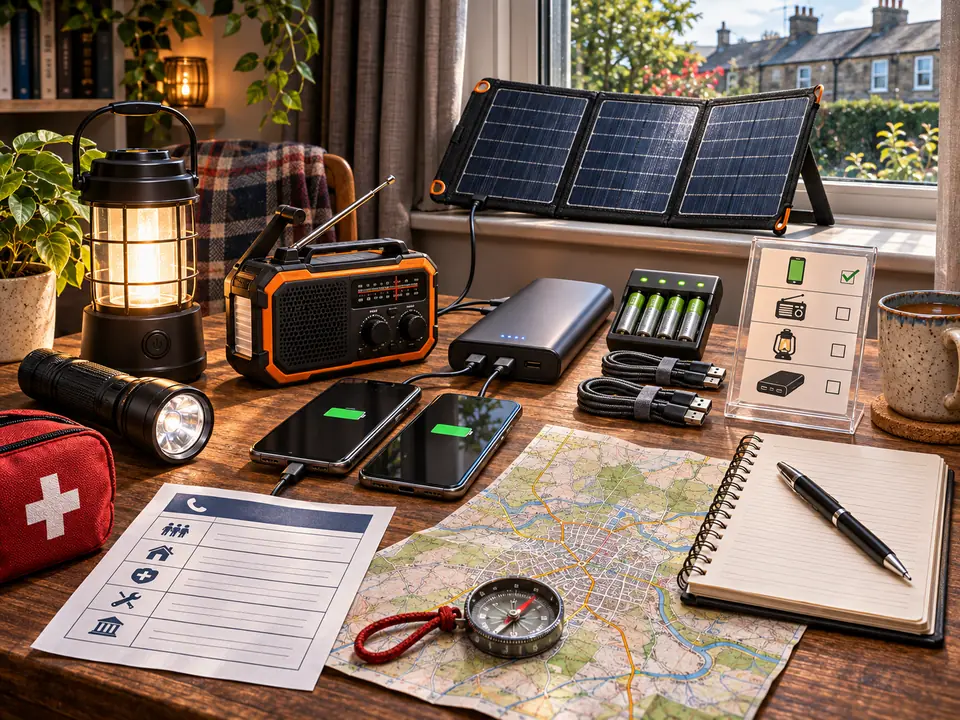
The British Red Cross includes a torch and a radio in its emergency kit for a power cut. A radio is the one way to hear updates if the internet and mobile network are down.
Who to call and how
The full list, including Scottish networks, is on what official guidance says. Write the numbers on a card and keep it with your torch, because you may not be able to look them up.
Landlines and mobiles
ready.scot suggests having a landline that does not depend on mains power, and keeping phones, laptops and tablets fully charged so they can run on battery for a short time. The Red Cross includes a portable phone charger in its kit list.
We cannot tell you how long mobile coverage would last in a long, wide outage. It depends on your area and network, so plan as if it might not be there.
Emergency Alerts
Because alerts rely on the mobile network, they may not reach you in a wide outage, so do not treat a lack of alert as a sign that all is well.
Water supply alerts
ready.scot suggests signing up for free text alerts from Scottish Water about supply interruptions. If you are in England, Wales or Northern Ireland, check your own water company’s website now to see whether it offers something similar, because you will not be able to later.
Neighbours and community
When other channels fail, your neighbours are the information network. The British Red Cross and ready.scot both advise checking on people who might need help, if it is safe to do so. Agree with someone nearby that you will knock on each other’s doors if the lights go out.
- In a flat
- Know your neighbours on your landing. In a block, find out whether there is a building manager or residents’ group, and how they would contact you.
- In a house
- Agree a simple signal with a neighbour, such as a note in a window or a knock, to say you are all right.
- On a small budget
- A basic battery radio and a written list of numbers cost little and do the most.
- With limited storage
- A small radio and a laminated card fit in a drawer.
Keep this guidance offline
The 72-Hour Plan is a free 21-page digital PDF that gets a household ready for three days without power. The Black Sky Handbook is a 188-page digital PDF for £9.99, with planning for seven and fourteen days. Both are PDFs you can save to a phone or print.
Sources
- Prepare for a power cut, British Red Cross
- The future of landline calls, Ofcom
- How Emergency Alerts work, GOV.UK
- The 105 service, Energy Networks Association
- Loss of utilities, ready.scot
- Power cut tips, Power NI