In winter, a long power cut is as much a cold problem as a dark one. This guide covers how to keep one room warm, how to light it without risking a fire, and the carbon monoxide rules that matter most.
Written by Black Sky EventFacts checked 16 to 21 November 2026
Heating usually stops with the power. Even many gas boilers need a small amount of electricity to run their ignition, fan and pump, so you may have gas but no heat. The most useful plan is to make one room warm, and to be careful about how you light it, because the biggest dangers in a power cut come from the things people use to cope.
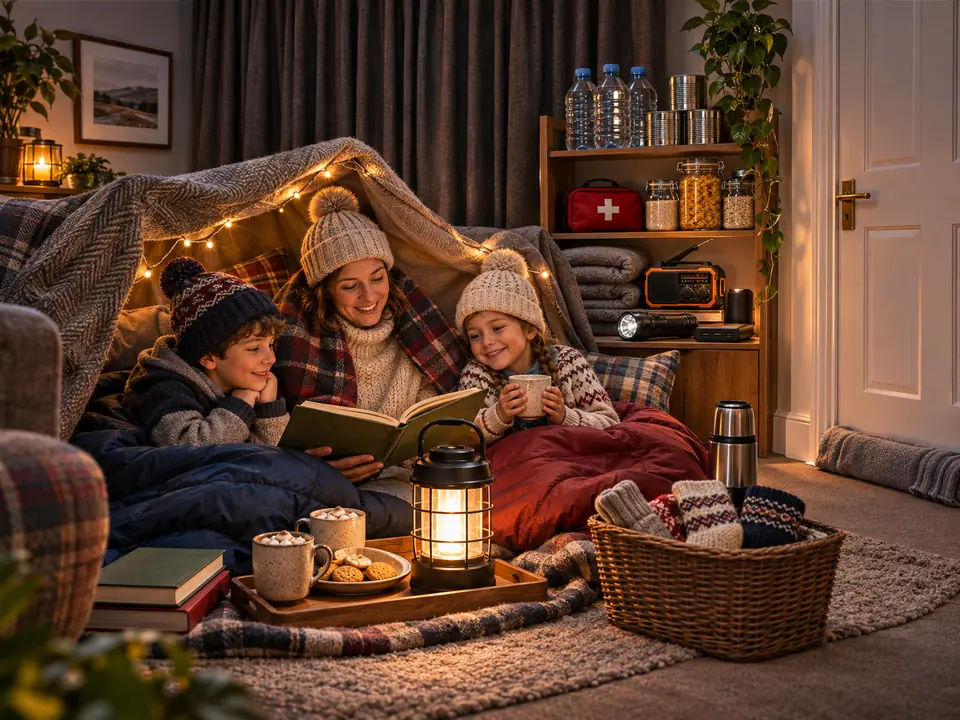
Keep one room warm
Who needs extra care
Call 999 if someone has trouble breathing, collapses or cannot be woken. If they are less severely unwell, NHS 111 can advise.
Heating safely
Carbon monoxide
Light without fire
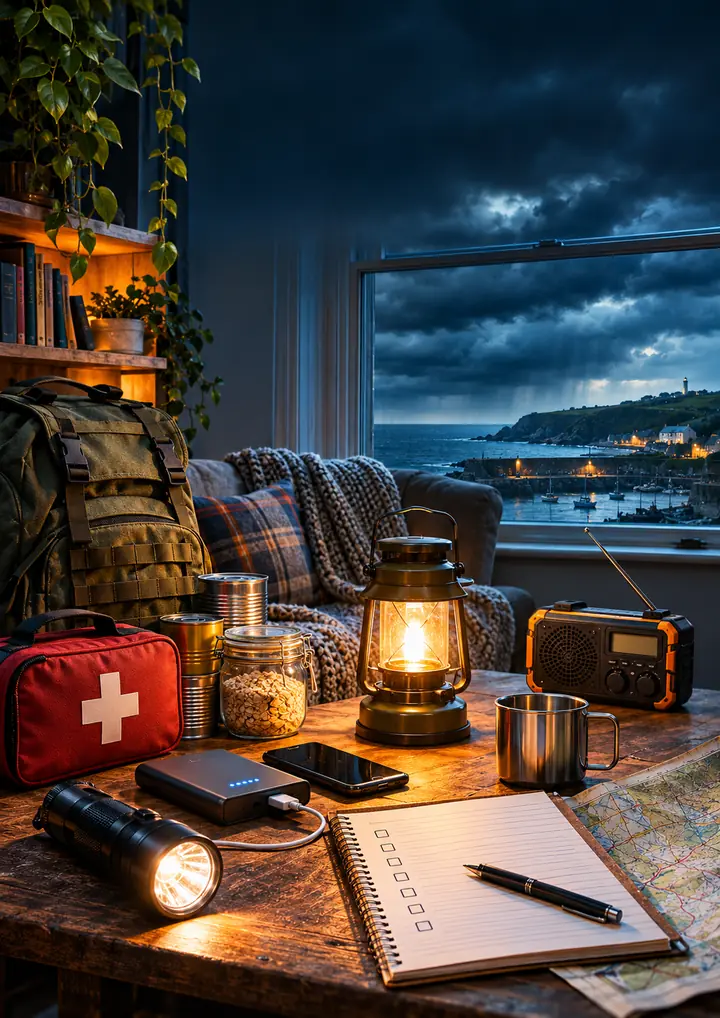
Illustration of safe lighting. This image does not show a real home.
In a flat
Stay together in one room. Do not bring a barbecue or camping stove in from a balcony, and do not use gas cylinder heaters in a high-rise flat.
In a house
A fire-safe place for a lantern and a clear path to the door matters more than any heater. If you have a working chimney or an approved stove, make sure it is safe to use.
On a small budget
Blankets, layers and a closed door do more than most gadgets. Add a head torch or lantern before you buy any heater.
With limited storage
Wear it, do not store it: a warm hat, gloves and thermal layers take up little room.
Keep this guidance offline
The 72-Hour Plan is a free 21-page digital PDF that gets a household ready for three days without power. The Black Sky Handbook is a 188-page digital PDF for £9.99, with planning for seven and fourteen days. Both are PDFs you can save to a phone or print.