What could cause a black sky event?
A long, wide power cut can start in several ways. This page looks at what real events show about each one, and is honest about what nobody can predict.
A black sky event is described by what it does, not by what starts it: a power cut across a wide area that lasts for days. Several different things could start one, and some of them have already caused serious power failures in the UK or elsewhere. None of the examples below is a black sky event as we define it, but each shows part of how one could happen.
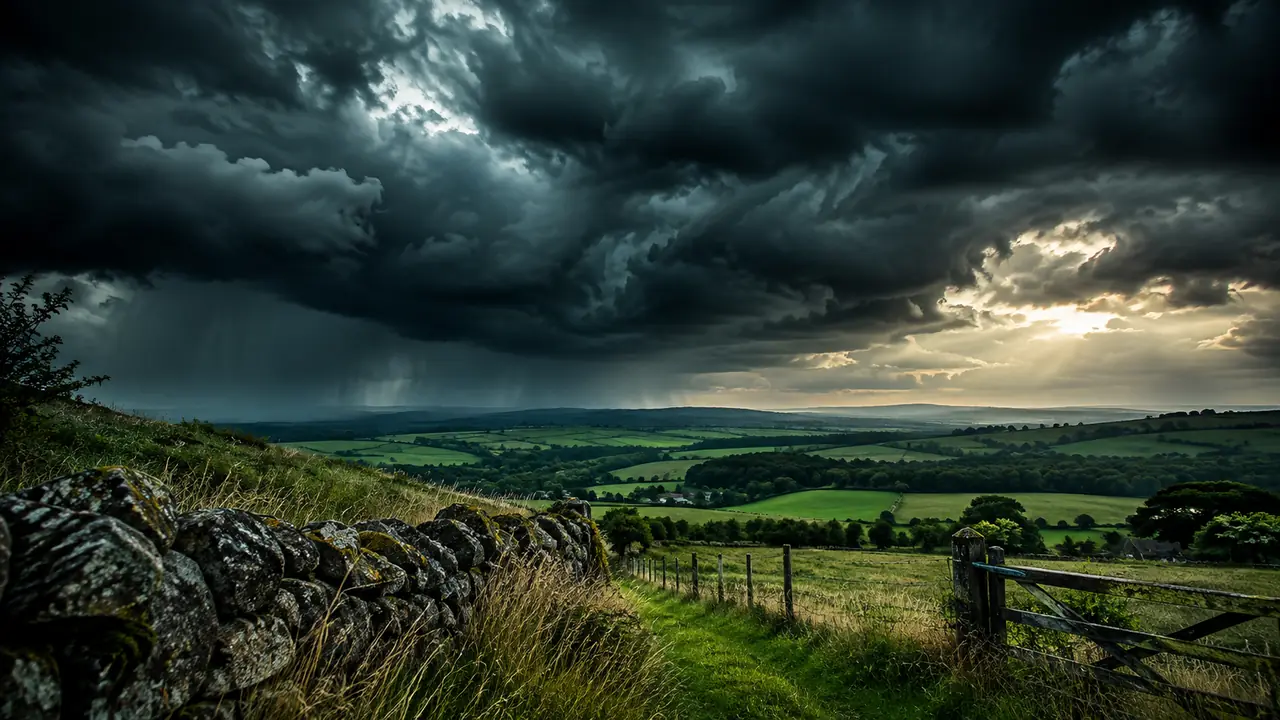
Severe weather and flooding
Storms and floods are the most familiar cause of long power cuts in the UK, because they damage overhead lines and make the roads that repair crews need impassable. They usually affect one region, not the whole country, but the examples below show how long some households can be without power.
- Storm Arwen, 26–27 November 2021. A Government review reported electricity disruption to just over 1 million customers. About 83% had their power back within 24 hours. A small but significant share of customers waited up to 13 days.
- Storm Éowyn, January 2025. Scottish and Southern Electricity Networks said it restored power to 92,000 customers. It reported that the damage was worst in Argyll and Bute, and that repairs in some areas took longer because of the extent of fallen trees blocking access.
- Storm Desmond, December 2015. Electricity North West reported that the River Lune overflowed in Lancaster and breached defences built for a “1-in-100 year” flood, cutting power to 55,000 properties in Lancaster, Morecambe and the surrounding area. It also reported that flooded substations in Carlisle cut power to 13,000 properties.
Cold, wet weather also makes a power cut harder to live with, which is why our guides give so much space to keeping warm.
Equipment and grid failures
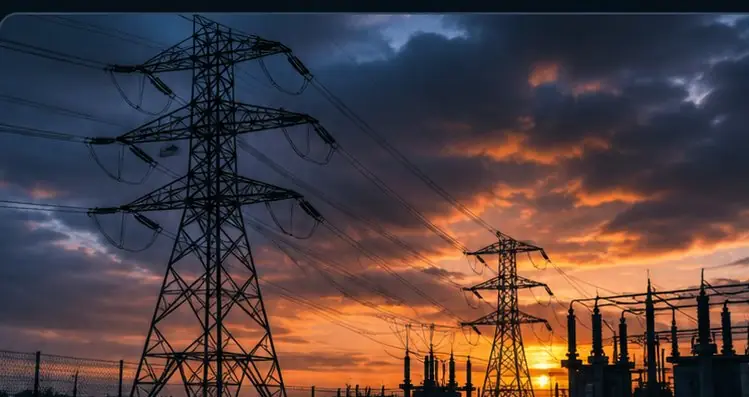
Sometimes the grid fails on a day with no storm. Electricity networks are built so that the loss of one part does not bring down the rest, so a major failure usually needs several things to go wrong together. Two recent examples show this.
- Great Britain, 9 August 2019. Ofgem’s investigation found that two large generators, Hornsea One and Little Barford, did not stay connected after a lightning strike, and that a smaller loss of local generation added to it. The result was disruption to more than one million consumers.
- Spain and Portugal, 28 April 2025. The expert panel whose final report was published by ENTSO-E, the European network of electricity grid operators, concluded that the blackout had multiple causes, not a single trigger. It described “a combination of many interacting factors”, including voltage control problems and generators disconnecting in a chain.
The lesson is not that the grid is fragile. It is that failures can start in unexpected places and spread quickly, which is why network operators and the Government plan for them in advance.
Cyber-attacks
Electricity networks depend on computer systems, so a cyber-attack on one is a recognised risk. What the public record shows is a mix of real incidents and a lot of speculation, and we have tried to stick to the former.
- Ukraine, December 2015. The Council on Foreign Relations reports that suspected Russian hackers compromised power distribution companies and gained access to control systems, and that more than 230,000 residents lost power, for up to six hours in some areas. The distribution system was targeted again in 2016. This is a real attack on an electricity network, and it lasted hours, not days.
- WannaCry and the NHS, 12 May 2017. This ransomware attack did not affect electricity, but it shows how a cyber-attack can disrupt services that people rely on. The National Audit Office found that at least 81 of the 236 NHS trusts in England were disrupted, that at least 6,912 appointments were cancelled, and estimated that the total was over 19,000.
We do not know how long a successful attack on the UK grid could keep the lights off, and we are not aware of an official figure we could quote. Whatever the cause, the effects on a household are the same, and so is the preparation.
Extreme space weather
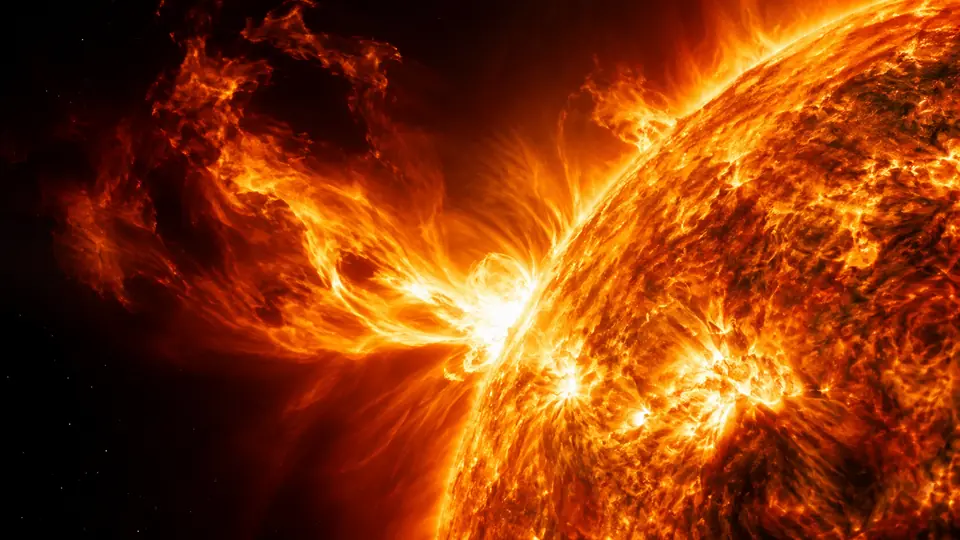
The Sun sometimes throws out clouds of charged particles. When one hits the Earth’s magnetic field it can cause a geomagnetic storm, and the British Geological Survey (BGS) explains that this can drive electric currents, called geomagnetically induced currents, through pipelines and high-voltage power lines. For power systems, BGS says, transformers can become saturated and heat up, and in the worst case this could cause blackouts.
The best-known example is overseas. BGS reports that in March 1989 a severe geomagnetic storm left about 6 million people in Quebec without power for around 12 hours, after voltage-control equipment tripped out. BGS also records measurements taken at Scottish power stations during storms in 2000 and 2003, which is a reminder that the UK is not exempt. We did not find a source that gives the chance of a damaging storm in the UK, so we do not give one.
What this means for your plan
Looking at causes can be interesting, but you do not need to decide which one worries you most. In every case the household problem is the same: no light or heat, a risk to water and food, no phone, and a wait of unknown length. A plan that covers those works for a storm, a fault or anything else.
- Start with three days. That is the figure the Government’s Be Ready campaign uses. Our power cut preparation guide breaks it into small jobs.
- Look after water, warmth and information first. See emergency water, keeping warm and using light safely and staying informed without phones or internet.
- Check what official bodies say. What official guidance says gathers the current advice for each UK nation.
Keep this guidance offline
The 72-Hour Plan is a free 21-page digital PDF that gets a household ready for three days without power. The Black Sky Handbook is a 188-page digital PDF for £9.99, with planning for seven and fourteen days. Both are PDFs you can save to a phone or print.
Sources
- Storm Arwen electricity distribution disruption review, GOV.UK
- A thank you to our customers following Storm Éowyn, Scottish and Southern Electricity Networks, 2025
- Storm Desmond, Electricity North West
- Investigation into 9 August 2019 power outage, Ofgem
- ENTSO-E publishes expert panel final report on the 28 April 2025 blackout in Spain and Portugal, ENTSO-E, 20 March 2026
- Compromise of a power grid in eastern Ukraine, Council on Foreign Relations
- Investigation: WannaCry cyber attack and the NHS, National Audit Office
- Geomagnetically induced currents, British Geological Survey
The Council on Foreign Relations is an independent research organisation, not a government body. Where a figure comes from a network operator, it is the operator’s own report.